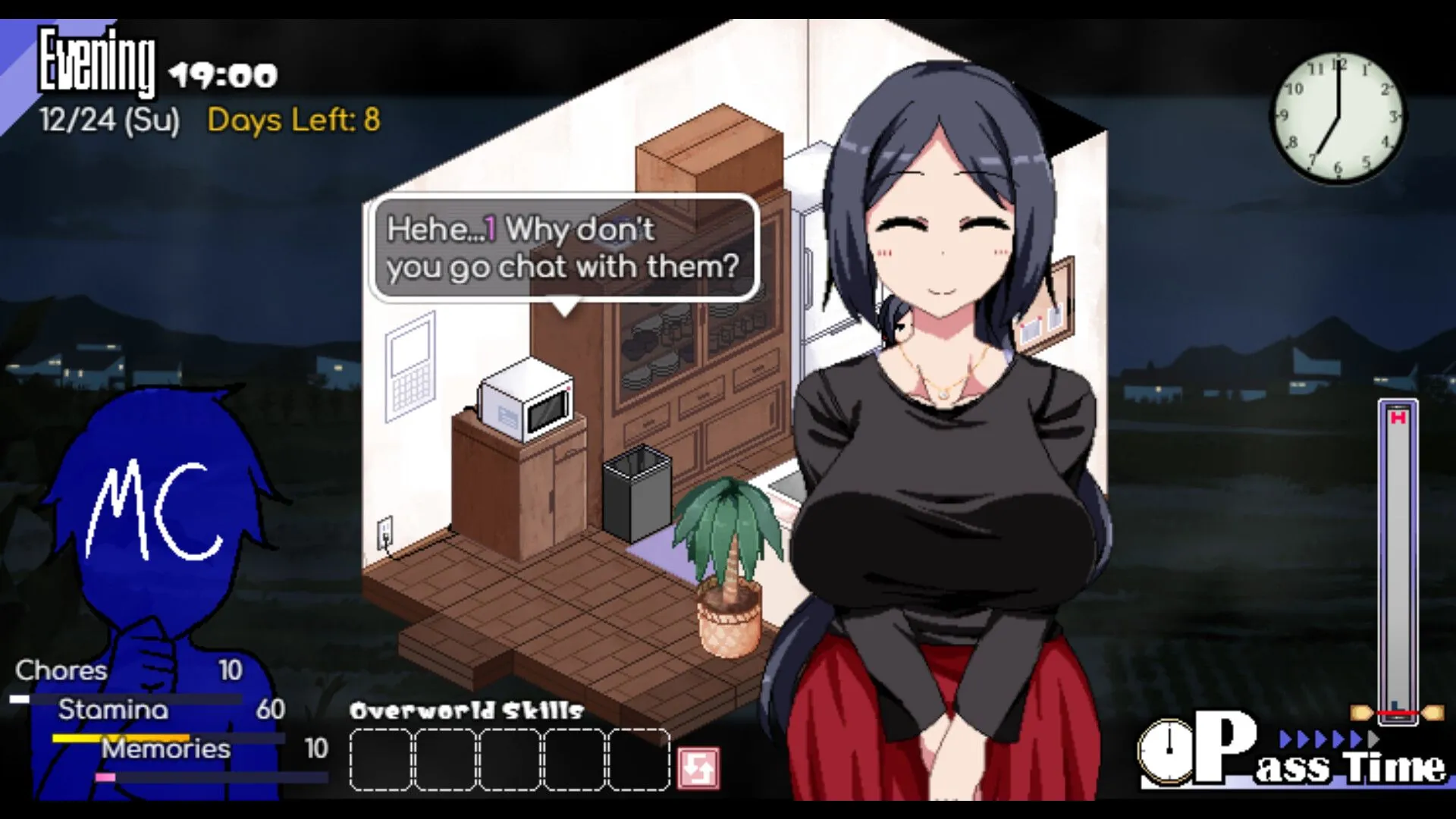
That New Teacher
Play That New Teacher
That New Teacher Screenshots





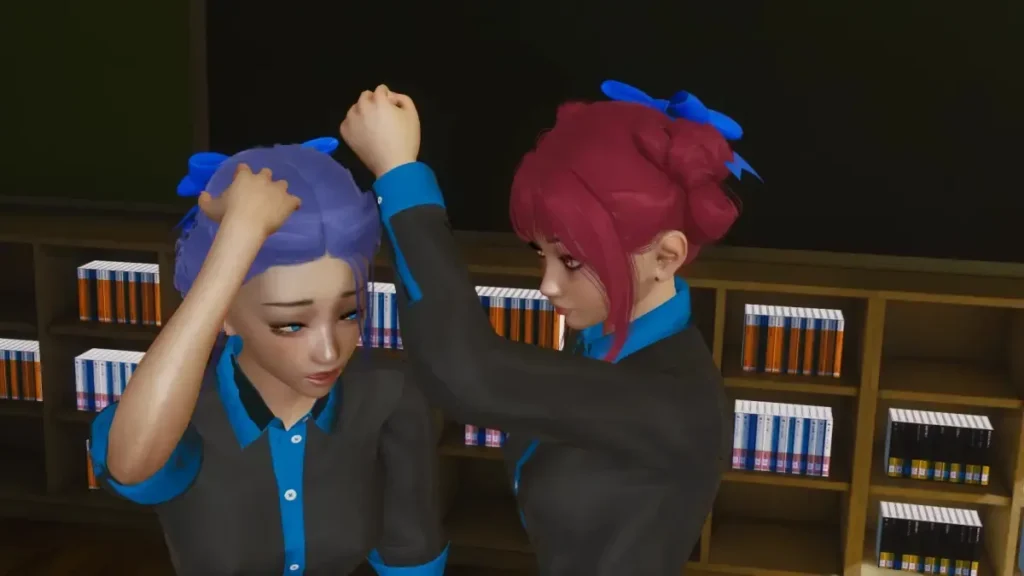

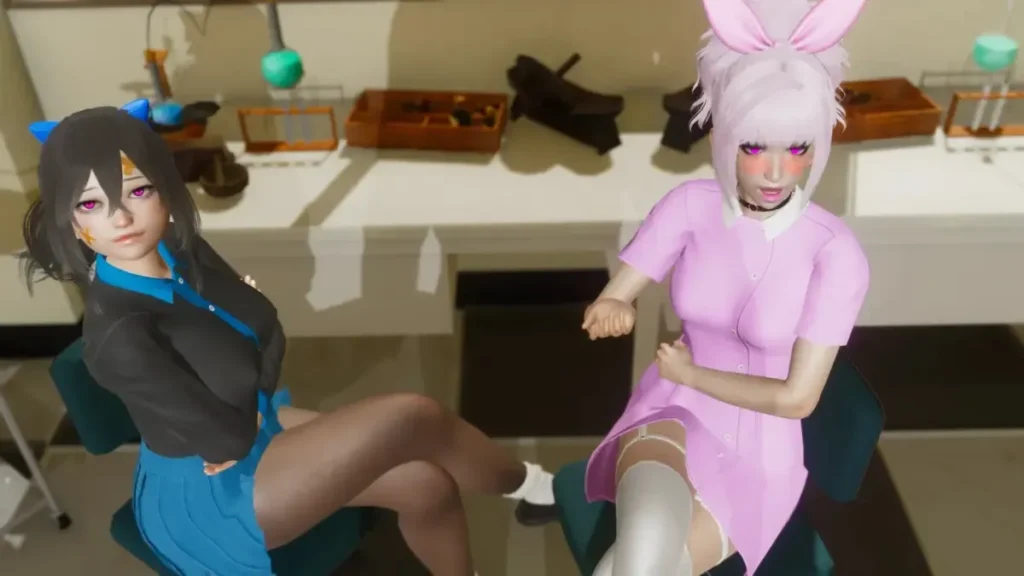



That New Teacher review
Explore gameplay mechanics, story progression, and character development in this indie title
That New Teacher is an indie game developed by RogueOne that offers a unique narrative experience set in an unconventional educational institution. Players take on the role of a protagonist who transitions from a lab technician position to become an ‘Enforcer’ at a private school with a revolutionary curriculum. The game features branching storylines, character-driven narratives, and player choice mechanics that shape the overall experience. This guide explores the core gameplay elements, story structure, character interactions, and what makes this title stand out in the indie gaming landscape.
Understanding That New Teacher: Game Overview and Core Mechanics
So, you’ve heard whispers about this intriguing indie title and you’re wondering what all the fuss is about. Maybe a friend mentioned it, or you saw some captivating art online. Welcome to the complete breakdown. “That New Teacher” isn’t your typical school simulator; it’s a narrative-rich experience where your moral compass is your most important tool. Let’s dive into what makes this game tick, from its unsettling premise to the systems that give your choices real weight. Consider this your essential That New Teacher gameplay guide 🎮.
What is That New Teacher and Its Premise
At its heart, That New Teacher game presents a fascinating and deliberately uncomfortable premise. You don’t play as a hopeful educator inspiring young minds. Instead, you step into the shoes of a former lab technician who, through a twist of fate, accepts a position at the mysterious Purgatory Private School. This isn’t a place for field trips and pep rallies. It’s a unique institution with a very specific, and arguably grim, purpose.
The school operates on a fundamental principle: correcting deeply ingrained behavior. The students here aren’t detained for minor infractions; they are individuals whose actions have led them to this secluded, authoritarian environment. Your role isn’t to teach algebra or history, but to administer a very particular form of “education.” This setting immediately separates That New Teacher from other narratives, asking you to engage with a system that is, by design, meant to be questioned.
What I find most compelling about the premise is its refusal to offer easy answers. From the moment you arrive, the atmosphere is thick with ambiguity. The school’s architecture feels isolating, the routines are rigid, and the power dynamics are immediately clear. You’re not a hero arriving to save the day—you’re a cog in a machine, and the game challenges you to decide if you’ll be a compliant cog, a rebellious one, or something in between. This foundation is crucial for understanding the indie game narrative at play here; it’s a story built on shades of gray rather than black-and-white morality.
Your journey begins with learning the rules of this strange world. You’ll meet the staff, understand the chain of command, and get your first look at the students you’ll be responsible for. The game does a brilliant job of making you feel both powerful and powerless simultaneously. You have authority over the students, but you are also subject to the school’s unforgiving hierarchy. This constant push and pull is where the real drama of That New Teacher unfolds.
The Enforcer Role and PARE System Explained
This is where the rubber meets the road. Your job title is “Enforcer,” and it’s exactly what it sounds like. Enforcer role gameplay revolves around managing the students assigned to you, ensuring they adhere to the school’s strict behavioral protocols. You are part disciplinarian, part supervisor, and part record-keeper. It’s a role that can feel cold and clinical, but the game’s depth comes from how you choose to inhabit it.
Are you a by-the-book Enforcer who believes strictly in the system’s methods? Or do you see cracks in the facade and choose to exercise your discretion, perhaps showing leniency or seeking alternative ways to reach a student? Your approach defines your experience. This isn’t about mindless repetition; it’s about engaging with each student as a character with a history, personality, and reactions to your style.
The core of all your interactions is the brilliant PARE system mechanics. PARE stands for Punishment and Reward Exchange, and it is the fundamental currency of your relationship with every student. Think of it as a behavioral economy. Every action you take—from issuing a command to responding to a success or failure—feeds into this system.
Here’s how it works in practice:
* Student Actions: A student under your charge will have tasks, behaviors, and attitudes. They might comply, refuse, excel, or act out.
* Your Judgment: Based on the school’s rules and your own style, you decide if a behavior warrants a Punishment (a negative mark, a loss of privilege, a corrective task) or a Reward (a positive mark, a privilege granted, verbal praise).
* The Exchange: This isn’t just a simple +/- score. The PARE system mechanics track trends. Consistently rewarding compliant behavior might make a student more eager to please. Over-relying on punishment might lead to resentment, defiance, or broken spirits. The system remembers.
What makes the PARE system so engaging is its nuance. It’s not about finding a single “correct” solution for each student. A strategy that works for one might backfire spectacularly with another. One student might respond well to firm structure and clear consequences, while another might shut down completely, requiring a more nuanced, almost diplomatic approach. Mastering this system is the key to progressing through the story and unlocking different character arcs. To succeed in your Enforcer role gameplay, you must become a keen observer, adapting your tactics to the complex individuals in your care.
Key gameplay features and mechanics that define the experience:
* Deep Student Profiles: Each student has a detailed history, personality traits, and hidden triggers that influence how they react to the PARE system.
* Resource Management: Your authority, time, and even the school’s tools are resources you must manage wisely.
* Relationship Tracking: Hidden meters track trust, fear, respect, and resentment, all affected by your choices within the PARE framework.
* Daily Routine: Gameplay is structured around a daily schedule of inspections, sessions, and reports, creating a compelling loop.
* Consequence Logging: Every major decision is logged, often coming back to influence events days or weeks later.
Gameplay Structure and Player Choice Mechanics
If the PARE system is the engine, then player choice mechanics are the steering wheel. That New Teacher game is masterful in how it presents a seemingly linear environment—the school, the schedule, the rules—and fills it with meaningful divergence. The narrative is best described as a “spine with branches.” There is a central plot that moves forward, but how you reach key moments, who you ally with, and what you discover is entirely up to you.
This is where the celebrated branching story paths come into play. Your decisions don’t just change a line of dialogue; they alter trajectories. Early in my playthrough, I had a student who consistently failed a particular task. The rulebook demanded a standard punishment. Instead, I used a reward from a previous success to “purchase” a different, more constructive corrective activity. This small choice seemed insignificant at the time. However, chapters later, that student became a pivotal source of information about the school’s secrets, a path that was directly locked if you had taken the standard punitive route. That’s the power of branching story paths—they make the world feel reactive and your role feel genuinely impactful.
The indie game narrative shines because it respects your agency. You can pursue relationships with other staff members, uncovering their motivations and potentially forming alliances. You can focus intensely on “reforming” a particular student, diving deep into their personal story. Or, you can play the system cynically, focusing only on your own metrics and survival. The game doesn’t judge you overtly; it simply presents the consequences. This creates immense replay value, as a second playthrough with a different philosophy can feel like a completely different story.
Personal Insight: On my first run, I played a “Reformer,” trying to find humanity within the system. My second run as a “Strict Disciplinarian” was chillingly different—characters I previously befriended were cold, events played out more violently, and the ending I reached was stark and unsettling. It was a powerful lesson in how player choice mechanics craft the tale.
Furthermore, the developers have implemented thoughtful content customization options. Recognizing that the game’s themes can be intense, they allow you to toggle or filter certain types of narrative content. This isn’t a “difficulty” setting, but a narrative one, letting you tailor the emotional experience to your comfort level while preserving the core That New Teacher story. It’s a considerate design choice that more narrative games should adopt.
Technically, That New Teacher is accessible across several platforms, ensuring most players can experience its unique story. The development is active, with the team consistently providing updates that refine mechanics, add new story beats, and respond to community feedback. This ongoing support adds layers to the branching story paths and deepens the Enforcer role gameplay over time.
| Platform | Status | Notes |
|---|---|---|
| Windows (PC) | Primary Platform | Full feature support, most frequent updates. |
| Linux | Fully Supported | Native build available. |
| Android | Playable | Optimized for touchscreen devices. |
| Mac | Fully Supported | Native Apple Silicon build available. |
In essence, That New Teacher weaves its premise, role, and systems into a cohesive whole. The school is the stage, the Enforcer is your avatar, and the PARE system is your method of interaction. But it is your choices—the paths you branch onto, the relationships you cultivate or destroy—that write the actual story. It’s a compelling demonstration of how powerful indie game narrative can be when it trusts the player with genuine consequence. Whether you’re analyzing the PARE system mechanics for optimal strategy or agonizing over a moral decision that will define your branching story paths, you are never a passive participant. You are the author of your own tense, thought-provoking chapter within the walls of Purgatory Private School.
That New Teacher stands out as a narrative-driven indie game that prioritizes player agency and meaningful choices. The game’s unique setting, innovative Enforcer role, and PARE system create an engaging framework for character interactions and story progression. With its branching narrative structure and multiple questlines, players experience different outcomes based on their decisions and dialogue choices. The developer’s commitment to ongoing development, evidenced by planned expansions like Day 3, demonstrates a dedication to expanding the game’s content and features. Whether you’re interested in character-driven narratives, choice-based gameplay, or indie game development, That New Teacher offers a compelling experience. For the latest updates and community engagement, joining the official Discord server provides direct access to development news and fellow players. As the game continues to evolve, staying informed about new releases and features ensures you experience all that this innovative title has to offer.